Latest: Singapore single mother awaits death row in Malaysia for drug trafficking. On the pretext of a business trip to China, Iqah was handed a suitcase containing heroin arranged by her Nigerian boyfriend and was arrested by Malaysian Immigration. A campaign is underway to raise funds for the appeal. To find out more, read

We have also heard that since Vui Kong's appeal started, there has been an unofficial stay of execution for all prisoners on death row in Changi Prison, pending the decision of the court on Yong's case. As the case has been dismissed by the Court of Appeal, we anticipate a Changi gallows bloodbath in a scale not seen since the Pulau Senang uprising in 1965 when 18 men were convicted of murder and hanged in a single Friday morning.

Singapore, which routinely persecute dissenters and critics, continue to hang young drug runners while at the same time work closely with Burmese military generals, and has invested billions in business ties with Burma, one of the biggest heroin manufacturing countries the world.

-----------------------------

If you know someone who's charged in a capital case, received the death sentence, or is on death row in Singapore and if you have have your side of the story to tell, contact us at sgdeathpenalty [at] gmail.com


Wednesday, March 24, 2010

When an intellectually handicapped gets systematically executed by the system

Law student Mohan Gopalan writes a compelling piece proving once again that removal of mandatory death penalty can indeed save victims that can fall into the trap of the non-discretionary nature of the law.

Described as a "guileless simpleton" with borderline IQ of 74 by trial judge M.P.H. Rubin, he delivered a lesser sentence to the accused, Rozman bin Jusoh, a 22-year-old Malaysian, to 7 years imprisonment for possession of drugs.

But the prosecution appealed and took it to the High Court where they sentenced the accused to death, noting that since the sentence was mandatory, "such considerations (of
his subnormal intellect and the narcotics officer instigating the accused to produce drugs) would only be relevant elsewhere".

If even the intellectually handicapped gets systematically executed by the state, what are mitigating factors useful for? Isn't mitigation a redundant process in capital cases like drug trafficking? Shouldn't it then be time for this section of the law to be updated?

There isn't much time for deliberation on this issue.
The law regarding capital punish for capital offences must be updated to give judges the discretion to make a fairer ruling. When even one person gets unfairly executed, it is a life gone and there can be absolutely no compensation for the family or the executed convict.


TOC: When discretion could have saved a life: the case of Rozman bin Jusoh

By Mohan Gopalan

On 24 November 1993, an undercover officer from the Central Narcotics Bureau (CNB) approached Rozman bin Jusoh, a 22-year-old Malaysian, asking him if he had cannabis. Rozman told the officer that he did not have any cannabis. Undeterred by this reply, the officer insisted that Rozman find some cannabis for him. Rozman replied, “We will see tomorrow”.
The CNB officer approached Rozman again the next day, asking again for cannabis. Rozman told the officer to wait while he consulted his friends. He found a friend who agreed to supply the drugs as requested, and arranged to hand them to the officer later that evening.
The officer suggested they meet at a Kentucky Fried Chicken outlet. Rozman brought the drugs in a plastic bag, which he placed on a chair at the table where he and the officer were seated. The officer stood up and walked to the counter to order a drink, and so did Rozman, leaving the plastic bag unattended on the chair. The officer then gave a signal, upon which other CNB officers entered the outlet and arrested Rozman.
Rozman was charged with trafficking in 1040.8g of cannabis. Under the Misuse of Drugs Act, trafficking in more than 500g of cannabis attracts the mandatory death penalty.
***
Over the course of investigations and trial, evidence slowly emerged that Rozman was intellectually subnormal.
The CNB interpreter who assisted in recording the statements Rozman had made to the police testified that Rozman was extremely slow. He had difficulties answering simple questions, such as how many brothers and sisters he had. Sometimes, it took him up to five minutes to answer questions as straightforward as those.
A clinical psychologist who had examined Rozman was also called to testify. She found that Rozman had an IQ of 74, which was borderline. Having also observed Rozman during the trial, she testified that Rozman could be easily manipulated by others and would not think deeply about the consequences of his actions. She also thought that Rozman might not be capable of discerning right from wrong.
The trial judge, Justice M.P.H. Rubin, also noticed that something was amiss.1 He noted that Rozman’s oral testimony was “punctuated with long pauses and was generally delivered in a halting manner”. At times, it was “hazy and disoriented”.
The CNB interpreter and the psychologist both emphasised that they did not think that Rozman was simply faking it. Likewise, the judge noted:
“Having observed the accused in the witness box, it cannot be gainsaid that he gave evidence in an unshrinking manner. There was never a trace of squirming, twisting or shifting. His evidence was, however, punctuated with frequent pauses, sometimes long, yet there was no sign that he was taking his time to contrive, concoct or improvise. In fact, he often looked plainly confused, sometimes even by straightforward questions.”
The judge also noted that Rozman’s “demeanour, inflexion and his swaying body movements…at times suggested that he was apparently oblivious to the seriousness of the charges facing him”. To the judge, Rozman was:
“… a guileless simpleton without any gift for contrivance. It must be so, for which trafficker would leave the drugs unguarded on a chair in a public place and walk up to the counter and ask for a drink?”
The judge did not think that Rozman’s subnormal intellect constituted unsoundness of mind, which would have been a full defence to the charge. However, given his subnormal intellect and the way the CNB officer had acted, the judge did not think it could be said that Rozman had intended to traffick in the drugs. The judge reasoned:
“It was…clear from the evidence that the CNB agent and the undercover CNB officer were more than mere agents, and had, in fact, undertaken a substantially active role in persuading [Rozman] to sell them drugs… [Rozman] was a person without guile and would not have embarked upon this expedition for a mere $100 if not for his feeble mind which seemed to have been overborne by the CNB agent and the CNB operative… There was a grave doubt raised as to whether he could be criminally responsible to warrant the mandatory death sentence, in light of his intellectual disability and the real possibility of being manipulated.”
The judge thought that “it would be unsafe for the court to proceed to convict him on the charge of trafficking”, and therefore convicted him for the lesser offence of possession instead. He sentenced Rozman to 7 years’ imprisonment.
Dissatisfied, the prosecution appealed. The Court of Appeal, presided over by Chief Justice Yong Pung How and Justices of Appeal M. Karthigesu and L.P. Thean, disagreed with Justice Rubin’s decision in the High Court.2 The Court of Appeal judges took the view that Rozman’s subnormal intellect was not sufficient to negate his intention to traffick in the drugs. They thought that while Rozman “may have been easily induced or instigated” by the CNB officer to sell the drugs, this fact and his subnormal intellect could be taken into account only in mitigating the sentence. However, they noted that since the sentence was mandatory, “such considerations would only be relevant elsewhere”. Rozman was therefore convicted on the charge of trafficking.
***
Rozman’s case provides an illustration of the problematic nature of the mandatory death penalty. While the judges were sensitive to the mitigating factors in Rozman’s case, they could not properly take them into account, and were left with no choice but to sentence Rozman to death. If the death penalty had not been mandatory, the judges would have been able to take into account Rozman’s subnormal intellect, as well as the conduct of the CNB officer. They could then have decided whether to award Rozman a long prison sentence, instead of the death penalty.3
Without the benefit of this discretion, Rozman bin Jusoh was hanged till death on 12 April 1996.
TOC: When discretion could have saved a life: the case of Rozman bin Jusoh

Monday, March 22, 2010

Blogger creates Anti-Mandatory Death Penalty Photo Project


By kirsten (http://kixes.blogspot.com)

Yesterday I started The Anti-Mandatory Death Penalty Photo Project, and was able to see the power of social media at work almost right away. One day later, the Facebook group has 154 members (with more joining every time I hit 'refresh'), and the photos are starting to trickle in.

Being a Facebook group, I first promoted the project by inviting all my friends, and posting the link on my profile (and urging others to do the same). I also promoted the group a little via Twitter, as well as this blog. TheOnlineCitizen also posted on their Facebook group, as well as their website. We didn't even have to leave our homes or workplaces to spread the word, such is the capability and power of social media.

I find it extremely heartening and encouraging to see social media working so well for a good cause. What a great time it is for discussion and the sharing of opinions! What a way to make a difference, to have our voices heard! It is nice to see people who support the same cause that I do, who are working towards the same ends that I am working towards, and know that if it weren't for social media we might have just been isolated individuals drowned out by the overwhelming white noise of the big wide world. But thanks to social media and the accessibility it provides, we are coming together, and our message is getting stronger or stronger.

So this is a big thank you to anyone who has joined the group, submitted a photo and/or helped to spread the word about The Anti-Mandatory Death Penalty Photo Project! Thank you for doing your part in raising awareness on this often-buried issue, and here's to change coming our way!

Putting social media to good use

Tuesday, March 16, 2010

TOC: M Ravi: Death penalty should not be dispensed ‘in an automated, robotic, spasmodic approach’

By Yini Chua
At the appeal hearing for Yong Vui Kong today, the Court of Appeal, consisting of Chief Justice Chan Sek Long, Justices of Appeal Andrew Phang Boon Leong and VK Raja, chose to reserve its judgment instead of delivering a verdict.
Yong is facing the mandatory death penalty for drug trafficking.
He has been through 2 stays of execution. Escorted into the courtroom by four uniformed guards, the 21 year-old Malaysian hardly moved in his seat throughout the hearing, with his shoulders hunched and head bent as he followed the proceedings intently via the court translator.
Representing Yong was Mr M Ravi of LF Violet Netto. His core argument was centered on the principle of one’s right to life, as echoed by Article 9(1) of the Singapore Constitution, which states that no person shall be deprived of his life or personal liberty save in accordance of the law.
Mr. Ravi challenged the constitutionality of the mandatory death penalty, stressing that it failed to deal with Article 9(1) adequately and adapt to changing standards of international law.
He also argued that Article 9(1) prohibits the arbitrary imposition of the death penalty, an act which is also against customary international law. According to Mr. Ravi, there is growing universal consensus that the mandatory death penalty is a cruel and unusual punishment and involves deprivation to life.
‘Customary international law evolves with the changing standards of human rights around the world,’ he posited.
Attorney General Walter Woon agreed that the issue is the constitutionality of the mandatory death penalty, not its desirability. As such, he argued that its implementation is constitutional because it is in line with laws passed by the legislature.
Mr. Woon also argued that ‘it is state practices that determines international law, not the other way round’.
However, he disagreed with Mr. Ravi with regards to the trend in international law, emphasizing that the international law has accepted the mandatory death penalty.
‘It is fallacious to assume that the law has changed,’ he said, reinforcing his argument that the issue of the abolition of the mandatory death penalty is simply a matter of controversy.
Another core argument that Mr. Ravi laid out was that the mandatory death penalty was contrary to the ‘equal protection’ clause as enshrined in Article 12(1) of the Constitution. He argued that it does not leave room for judicial discretion and specific circumstances, and the exclusion of such an integral process has resulted in a one-size-fits-all standardized sentencing process that is inherently wrong. With such rigid application, the law ceases to serve justice.
To illustrate this fact, Mr. Ravi pointed out the rationale behind Singapore law, which makes probation more available for minors (persons aged below 21).
Said Mr. Ravi, ‘(Probation for minors) assumes the potential vulnerability of youths, and therefore the shows that the law does indeed look at individual circumstances.’
Along the same vein, the mandatory death penalty infringes upon equal protection because the court is obliged to condemn a drug mule in possession of 15 grams of heroin to the highest penalty of death, but inflicts a lesser punishment upon a professional dealer caught selling for distribution to many addicts a total of 14.99 grams.
Mr Ravi relied heavily on the example of the India for an alternate interpretation. Article 12 of the Indian Constitution, in stating that ‘no person shall be deprived of his life or personal liberty except according to procedure established by law’ is identical with Article 9(1) of the Singapore Constitution. The Indian Supreme Court has interpreted it in a different way: the process by which someone is subject to death must be a fair, just and reasonable procedure.
As such, the Indian Supreme Court prohibits the mandatory death penalty even for the most severe of crimes. The death penalty sentence is only meted with judicial discretion.
In his counterargument, Mr. Ravi criticized the simplistic logic that underpins Attorney General Walter Woon’s argument, who asserted that the mandatory death penalty acts as a deterrent against drug trafficking. He argued that there have been no substantial studies based on the deterrent value of MDP.
‘Even the state is silent when is comes to this issue,’ he pointed out.
He also cited a number of Asian countries which have abolished the mandatory death penalty, including China, Taiwan, Korea and India.
Justice of Appeal Andrew Phang tried to clarify the debate further by enquiring whether ‘decisions in other countries (are) a product of domestic consensus or result of international customary law’.
Mr. Ravi ended his argument on a passionate note, beseeching the judges to read the constitution in accordance to the spirit of the law, and ‘not in an automated, robotic, spasmodic approach’ that does not fulfill the need for justice.

TOC: Judges reserve judgement in Yong’s mandatory death penalty appeal

By Wong Chun Han

The Court of Appeal reserved judgement today in the case of convicted Malaysian drug mule Yong Vui Kong, who has challenged the constitutionality of the mandatory death sentence he received.

Chief Justice Chan Sek Keong told a packed courthouse, after a two-and-a-half-hour-long hearing, that the Court would retire to consider the case and announce its decision at a later date.

Yong, who was sentenced to death in November 2008 for trafficking 47 grammes of heroin, will have his execution stayed pending the outcome of the appeal.

M Ravi, representing 21-year-old Yong, argued the unconstitutionality of the mandatory death penalty on the grounds that it does not allow judges to sentence criminals with punishments proportionate to their crimes and individual circumstances.

He told appeal judges CJ Chan and Justices Andrew Phang and V K Rajah that this denial of judicial discretion in capital cases amounted to inhuman punishment.

The mandatory death penalty thus violates customary international law forbidding the use of “cruel, inhuman or degrading treatment or punishment”, as stated in Article 5 of the Universal Declaration of Human Rights.

Such a violation means the mandatory death penalty falls foul of Article 9 (1) of the Singapore Constitution, which states that “no person shall be deprived of his life or personal liberty save in accordance with law”, Ravi argued.

The Court thus ought to exercise it powers of constitutional adjudication and rule the mandatory death penalty as unconstitutional, he added.

Clarifying that he was against the mandatory imposition of the death penalty and not the death penalty per se, Ravi concluded: “Kill if you must, but not in an automated, robotic, spasmodic and reactionary manner.”

Attorney-General Walter Woon, responding for the prosecution, challenged Ravi’s arguments, saying that the removal of the mandatory death penalty is a political issue rather than a legal one, its retention or otherwise was a matter for Parliament to decide.

He also challenged Ravi’s argument that the deprivation of judicial discretion in sentencing amounted to inhuman punishment, since the same logic ought to then apply to all mandatory penalties.

The mandatory death penalty, AG Woon said, also remains permissible under both common and customary international law.

No rule of customary international law denounces the use of the mandatory death penalty, he claimed, as the punishment is being applied by 31 countries – including China and India. Its use was not deemed objectionable by world powers such as the United States and Britain under the Universal Declaration of Human Rights for much of the 20th century.

Ravi countered these arguments, noting that the current situation – where only the Court has no discretion in deciding the punishment in capital cases – is untenable. In contrast, the prosecution has discretion over whether to press charges for a capital case while the President exercises clemency powers.

Given that the law makes assumptions on criminal culpability, vis-à-vis ages of majority for example, providing discretion in sentencing would allow the Court to investigate these assumptions through the considering of individual circumstances.

Ravi also clarified that China and India in fact operate discretionary death penalties, and refuted AG Woon’s suggestion that Asian countries have resisted European attempts to create a new legal custom, given that many Asian countries do not impose mandatory death penalties.

Hong Kong has no death penalty, while China, India and Japan do not have the mandatory death penalty, and South Korea and Taiwan have held moratoriums on executions, he said.

Southeast Asian nations have also made overtures with regards to the protection of human rights since signing the Asean charter, Ravi added.

Ravi was aided by three London lawyers, including international human rights law expert Edward Fitzgerald QC of Doughty Street Chambers, who helped research the case. All four are working on a pro bono basis.

No date has been set for the Court’s decision, which is expected within the next three weeks.

TOC: Judges reserve judgment in Yong's mandatory death penalty appeal

TOC: Discretion to the judges – judgment reserved

By Kirsten Han


It’s a “slippery slope” argued Attorney-General (AG) Walter Woon; the thin edge of the wedge which pitted the legislature against the judiciary. With the multiple notices around Singapore’s borders warning against carrying drugs, “no one can traffic drug by accident”, he insisted, and hence the mandatory death penalty is a necessity to keep the streets of Singapore clean.

As AG Woon was trying to make out his case, behind a glass partition with two police officers on his right and his left, sat Yong Vui Kong; who in 2007, when he was barely 19, became a drug mule, blindly following the instructions of his boss in Johor Baru to give ‘presents’ to people in Singapore. As it turned out, the ‘presents’ were 47 grams of heroin.

As Vui Kong sat meekly in the dock, trying to follow the hearing through the court appointed Mandarin interpreter, Mr M Ravi the defense lawyer for Vui Kong, engaged in a highly technical debate, that the mandatory death penalty is a “cruel and unusual” form of punishment, and that the court should be given discretionary powers in sentencing.

Mr Ravi argued that the judges should be able to make their own decisions based on the details and circumstances of each individual case.

He highlighted the fact that Singapore is one of only fourteen countries left in the world that has the mandatory death penalty, an extremely anachronistic law that does not reflect internationally held views on human rights.

Mr Ravi He also drew attention to his client, who was only 19 years old when he was caught in possession of 47g of heroin, saying that Vui Kong must be considered as an individual case instead of sending him automatically to the gallows under the mandatory death penalty.

While re-emphasising the centrality of his case that he is not arguing for the abolishment of the death penalty, but simply for the removal of the mandatory aspect of the law, Mr Ravi pointed out that no studies have proven that the mandatory death penalty is an effective deterrent when it comes to drug trafficking.

After both sides have presented their cases and arguments, the judges praised M Ravi for the effort he had put into his submission, and thanked him for providing the court with an update on current international practices with regards to the death penalty. They decided to reserve their judgment on the hearing until further notice.

If the Court of Appeal rules that the mandatory death penalty is incompatible with the Constitution of Singapore, it would signal a great change in Singapore’s legal system, especially in drug-related cases.

It is a change however which will require the parliament to pass it into law.

_______________________________________

Sketches: Joshua Chiang

TOC: Discretion to the judges - judgment reserved

Monday, March 15, 2010

LIANAIN FILMS: “For Me, I’m Hoping For A Miracle”

Yun Leong looks like he’s shrunk. He’s lost maybe five pounds since December. There are bags under his eyes. He sounds tired.


“It’s been tough,” he says. “Chinese New Year was not good.”

“How’s your family?”

“They’re coping.”

“And your mother?”

“She’s well.”

He pauses. “She still asks about him.”

Him. Vui Kong. Her youngest.

“She still doesn’t know?”

“No. She’s been told she’ll never see him again. But she doesn’t know he was caught with drugs, or that he’s been sentenced to death.”

The pressure on Yun Leong must be overwhelming. No wonder he looks so gaunt.

We’re meeting just days before Vui Kong’s hearing before the Court of Appeal. His lawyer’s working round the clock, preparing to challenge Singapore’s mandatory death penalty for drug trafficking. It’s a staggering undertaking - stacks of papers, huge bundles of authorities, hours and hours of research. You wonder if the two brothers understand what’s happening.

“My brother’s been learning English so he can read all the documents," Yun Leong says. "It’s very complicated but he’s determined to understand what’s going on. He’s also meditating a lot. He tells me I should meditate too.”

“So, do you?”

He laughs – the first time you’ve ever seen him do that.

“I try, I’m always trying. But I’m just too busy, you know?”

And then he changes the subject. Pulls out a piece of paper from inside his bag.

“Vui Kong wanted me to give you this.”

It’s a little surreal, receiving a letter from death row. But the message is upbeat. There isn’t a hint of self-pity. No plea for mercy. Rather, the boy thanks everyone for their generosity and support.

“I made a mistake because I was uneducated and didn’t know better…I am thankful I wasn’t put to death on the 4th of December.”

They’d as good as given up last year. The family had even made funeral arrangements and were in the midst of saying their final goodbyes. But then the unthinkable happened. Vui Kong’s lawyer succeeded in getting not just one, but two stays of execution.

You wonder what will happen at the next hearing and a knot forms in your throat. Yun Leong senses this. He tells you his brother’s in a good place now. Very calm, very focused. He’s ready to face the worst, but hoping for the best. He’s incredibly strong.

“Unlike our little sister, who still can’t stop crying.”

“And you?”

“For me,” he says, “for me, I’m hoping for a miracle.”

Yong Vui Kong's hearing before the Court of Appeal will take place on the 15th of March, 2010.

LIANAIN FILMS: "For Me, I'm Hoping For A Miracle."


Sunday, March 14, 2010

TOC: The story of a boy

Yong Vui Kong’s appeal hearing takes place at 10am on Monday, 15 March 2010.

By Andrew Loh

Yong Vui Kong was 12 when he left his grandfather’s palm oil estate “deep in the forests of Sabah” in Malaysia to strike it out on his own. He had had enough of watching his mother being abused by his grandfather and her relatives. He wanted to help her escape what he now calls “that place of pain”. And so, he made up a story. He told his mother that he had found someone who would take him in as a godson. But the truth was, his “godfather” ran an illegal gambling business. Vui Kong went to work for this man, hoping to save up enough money so he could rescue his mother.

He was eventually thrown out by his godfather. Vui Kong thinks it was probably because he was too small and skinny to be of any use. He ended up washing cars to survive, making about RM$3 a day. It was hardly enough to pay for food, let alone accommodation. He would often pester his friends to put him up for short periods of time. He lived like this for three years.

At 15, he made his way to Kuala Lumpur, the capital of Malaysia, hoping to find a better job. But things didn’t turn out the way he planned. He faced discrimination because he came from a small town and was often beaten up. He found work in a Chinese restaurant but was paid far less than his colleagues.

A local gang recruited him to hawk illegal video compact discs . Soon he was told to help collect debts. He was later given a more “important” job by his “Big Brother”, who promised to pay him handsomely. The man had treated Vui Kong well – feeding him, clothing him and taking him out to fancy restaurants. Vui Kong felt compelled to do anything “Big Brother” said. More importantly, he needed the money. His mother was suffering from severe depression and he wanted to help pay for her treatment.

He started delivering“gifts” to various clients. He did not know it initially, but the colourfully gift-wrapped packages contained drugs.

In 2007, Vui Kong was caught while making a delivery in Singapore. The police found 47.27 grammes of heroin on him. A judge eventually handed him the mandatory death sentence for drug trafficking.

Harsh Reality

In Singapore, hangings take place at dawn on a Friday. Prisoners are only told about their impending execution on Monday. Vui Kong broke down when he was informed that he would be put to death on 4 December 2009. He hadn’t seen his mother in more than two years. She was still battling depression and all through this time, the family had decided to keep the truth from her. But the thought of not saying goodbye was too much for Vui Kong to bear and his siblings decided to fly her to Singapore.

They finally met three days before the scheduled execution. It was an emotional reunion. Vui Kong knelt down before his mother, bowing to her three times. He then begged for her forgiveness and told her he had to “go away forever” to do “penance” for all the bad things he had done. He told her she would never see him again.

Did she understand the meaning behind his words? Perhaps we will never know. What must have been clear to her though was that her son had undergone a dramatic transformation. He had embraced a new way of life in prison and was now a devout Buddhist. He would wake up at 4am every morning to meditate and he eagerly sought the advice of the Buddhist monks who visited him regularly.

For the first time in his life, he was taught to discern right from wrong. He also realised that contrary to what he was told as a child, cigarettes were not the same as drugs. “If I knew they would harm anyone, I would surely not do the job,” he said in his clemency appeal to the President in 2009.

He found a friend in prison – a 22-year-old from Malaysia, who was also received the death penalty for drug trafficking. The boy would die just three months before Vui Kong’s scheduled execution. He was a trembling mess the day before the hanging. Vui Kong would later tell his brother that he stayed up all night comforting his friend, urging him to meditate so he could face his final moments with inner peace.

The next morning, the boy had to be dragged from his cell to the execution chamber, crying, wailing and begging to be freed and to be forgiven.

For himself, Vui Kong continues to hope for a miracle. He’s even started to learn English so he can better communicate with his lawyer.

“He is remorseful and feels he should be severely punished,” his brother Yun Leong explained, “but he wants to live so he can continue seeing us, seeing our mother again. He wants to keep learning and meditating and being a better person.”

When the court granted him a stay of execution in December, one of the first people to pay Vui Kong a visit was his lawyer. During the meeting, Vui Kong presented him a gift – a picture that had taken him weeks to complete.

“He would kneel for hours as he drew,” his lawyer said.

The picture is a colourful interpretation of one of the manifestations of Lord Buddha – he is standing at the gates of hell, saving souls from eternal damnation.

______________________________________

Photos courtesy of The Death Penalty in Singapore

TOC: The story of a boy

Sunday, March 7, 2010

How many lives must be wasted before we finally bring this issue to the table to be discussed?


Yong Vui Kong's (above, with sister) appeal against his death sentence for drug trafficking will be held on the 15th of March, 10a.m., at the Court of Appeal, Supreme Court Singapore.

sgdeathpenalty has been actively campaigning to raise awareness on the use of the mandatory death sentence for drug traffickers like Yong Vui Kong, but the fact of the matter is that for every Yong Vui Kong, there maybe a dozen or so sentenced to the gallows that do not get publicised in the press.

The review of the law is pressing, and sgdeathpenalty together with The Online Citizen, calls for an immediate convening of a working group for a moratorium on the mandatory death penalty. How many lives must be wasted before we finally bring this issue to the table to be discussed? Is there no better alternative punishment for borderline drug cases like these, and is there no consideration that there is possibility of repentance and that the condemned person will bear no harm to society if given the chance to live?

To quote a netizen, "when the State brings its criminal jurisdiction to bear, it acts on behalf of all Singaporeans. If Vui Kong is hanged, he will be hanged on your name and mine." This statement bears true to all similar judicial executions carried out in Singapore.

Wednesday, March 3, 2010

Mandatory death penalty for kidnapping vs drug trafficking - is mandatory death penalty still relevant?

By Wong Chun Han
The Online Citizen speaks to Professor Michael Hor who teaches at the National University of Singapore Faculty of Law. His areas of research include criminal law, evidence and constitutional law. He has published several academic papers on capital punishment in Singapore and was a consultant to the Law Society’s Ad Hoc Committee on Capital Punishment.
TOC: Why might the mandatory death penalty be considered legally problematic and how would you explain this to laymen?
Prof Hor: Perhaps the most prominent aspect of a mandatory death penalty is the absence of a judicial discretion in relation to the most extraordinary sentence in our criminal law. The judge trying the case can only determine guilt or innocence, and once that is done, the death penalty automatically follows.
This goes against the grain of modern penological thinking that the punishment ought to fit not only the crime, but the criminal. It means that the judge should have the power and the duty to take into account the personal circumstances of the offender and especially whether there are significant reasons why, although the offender did indeed offend, the punishment ought not to be death – the maximum permissible by the law.
To give a simplistic example, some of us might think that the death penalty is justified for a drug trafficker who is very wealthy and who traffics in large amounts of illegal drugs only to feed his or her own greed, but most of us might think quite differently about another who had agreed to carry a little over the statutory limit in order to pay for necessary medical treatment of a family member.
The law traditionally vests sentencing discretion in our judges to take such sympathetic circumstances into consideration. What actually happens where the death penalty is “mandatory” is not so much that there is no discretion, but that the discretion is now only in the hands of the police (in terms of investigatory decisions) and the Public Prosecutor (in terms of prosecutorial decisions). The traditional thinking is that the judges who have sufficient detachment from the investigative and prosecutorial process ought to exercise the final decision. A judicial decision also has the advantage of being entirely “open” – for the reasons must be fully declared to the public, and of being appealable to the Court of Appeal (normally three of our most senior judges).
TOC: What are your views on the deterrent value of the mandatory death penalty? Is there a significant difference with that of discretionary death penalty?
Prof Hor: I think we simply do not know. Its proponents often point to the fact that drug offending in Singapore has been kept significantly down by the mandatory death penalty. But if the mandatory death penalty is the key, or at least one of the keys, then how do we explain that for kidnapping, which carries a discretionary death penalty under the Kidnapping Act, seems to have achieved even more spectacular results? Some also argue that the introduction of the mandatory death penalty in the 1970s did actually result in a fall in drug offending – but again, we do not know whether and to what extent the mandatory death penalty played a role, for at the same time, it was revealed in Parliament that the government was going to devote much more resources into drug enforcement.
Was our success because of enhanced enforcement or because of the mandatory death penalty (or both)? Drug offences did dip, but rose again in the early 1990s, apparently to levels which were higher (subject to population increase) than the 1970s – and in all that time the mandatory death penalty was well in place.
The deterrent effect of the mandatory death penalty in the context of murder is even more uncertain – it would appear that almost all murders are “crimes of passion” or committed in the heat of the moment, perhaps in the course of robbery. Deterrence works only when potential offenders have sufficient capacity and opportunity to calculate the consequences of their actions – more precisely, it requires the potential offender to discriminate between a discretionary death penalty (I may get the death penalty), and a mandatory death penalty (I will get the death penalty). That would appear to be unlikely in crimes of passion.
Now we must also be clear, on the other hand, that none of this proves that the mandatory death penalty does not work. We simply do not have, in my view, convincing reasons to believe that it does.
TOC: What are the possible constitutional objections to the mandatory death penalty? Can a strong case be made for the repealing of the mandatory death penalty?
Prof Hor: Shorn of technicality, the constitutional case against the death penalty is essentially based on the argument that the right to a fair trial includes the right to suffer only punishment which is proportionate to the seriousness of the crime and the blameworthiness of the offender. Where the death penalty is mandatory, the court is not entitled to exercise its traditional function of calibrating the severity of punishment to the seriousness of the crime and the blameworthiness of the offender. The importance of punishment proportionality (punishment fit for the crime and the offender) is heightened in the context of the death penalty, which is the most severe punishment we can visit upon an offender.
A constitutional challenge was mounted in the early 1980s with the Privy Council, then our highest court, rejecting the argument. Much has happened since, with later Privy Councils, and other major common law courts, apparently repudiating this decision. It remains to be seen whether our courts will adhere to the earlier decision or choose to take on board these later developments.
TOC: Given that the Court of Appeal will be hearing 21-year-old Malaysian drug mule Yong Vui Kong’s case in March, during which counsel will present arguments on the constitutionality of the mandatory death penalty, should there be a moratorium placed on the mandatory death penalty whilst a decision on its constitutionality is pending?
Prof Hor: There is sense in a moratorium pending the decision of the Court of Appeal, in the event that the argument prevails. But on the other hand, administratively, it will pose problems. There is nothing to prevent arguments of this nature to be made every year or every other year (in the event that it fails) – does that mean that everything that is done a moratorium ought to be imposed until the disposal of that appeal?
TOC: You wrote in a 2004 article entitled, ‘The Death Penalty in Singapore and International Law’:
A legal claim against Singapore for breach of international law in the conduct of death penalty cases is unlikely to happen, and if it happens success is not at all clear given the present state of customary international law. But if I am correct about the international trend, then there might well come a time when custom crytallises leaving Singapore in the cold.
Do you think international state practice has coalesced sufficiently for people to make a case that Singapore’s persistence with the mandatory death penalty is contrarian to customary international law?
Prof Hor: Things seldom move that quickly in the formation of customary international law. Additionally, customary international law does not have a forum which can decide with finality what the law is.
But what appears to be happening in China is in line with the increasing parsimony in the use of the death penalty. Observers have noted that since the Supreme People’s Court assumed the power to review all death sentences in 2007, there has been a significant drop in executions. And the world press has yesterday and today (10 and 11 February 2010) carried the report that the Chinese court has issued guidelines for the imposition of the death penalty, drafted in apparently very restrictive terms. The fact that the Chinese Supreme Court has the power to review all death sentences (and does in fact reverse death sentences imposed by provincial courts) seems to imply that the penalty is never mandatory in China.
But a word of caution ought to be sounded before any direct comparison is made – for example, Singapore does have the avenue of executive pardon which it has, but rarely, exercised. The fact remains that such a power exists, although it is in the hands of the executive government and not the courts. Also, China’s range of capital crimes is much larger than Singapore’s – encompassing for example serious tax and corruption offenders.
TOC: Under the current legislation, judges have no discretion under the mandatory death penalty. Can we rely on the discretionary powers of the prosecution not to prosecute a drug offender who may be considered as not deserving of the death penalty?
Prof Hor: It is not in doubt that the prosecution certainly has the power to take into account mitigatory circumstances in deciding whether or not to prefer a capital charge. It is also fairly certain that the Prosecutor does on occasion choose a non-capital charge when a capital charge would have been possible on the facts. The question is whether, in addition to prosecutorial discretion, the court ought to have the final say in the imposition of the death penalty.
I can personally see no harm in requiring both the Public Prosecutor and the Court to “approve” a sentence of death. That is how the finding of guilt and innocence works anyway.
TOC: Hypothetically, what would happen if an innocent person had drugs planted in his or her suitcase whilst returning from a holiday and was caught? Why can’t an accused simply claim ignorance?
Prof Hor: That scenario, which is often suggested, seldom happens in practice, as far as we can judge from the reported cases. It is seldom the case that the accused was completely unaware of the package which turns out to contain illegal drugs. It is quite common for an accused to argue that he thought it was something else – gems, Chinese herbs and the sort.
Let us be clear that if indeed the accused successfully persuades the court that he actually thought the package contained something else (or that he did not even know of the existence of the package), he is entitled to an acquittal. The problem is with proof, because the legislation (Misuse of Drugs Act) contains presumptions which shift the burden of proof to the accused. He has to prove that he either did not know the package was in his bag, or that, if he did know, he did not realise that it contained illegal drugs.
The normal rule, which reflects the principle of innocence until proven guilty, is that it is the prosecution who must prove knowledge. The presumptions change that and require the accused to prove that he did not know – in other words he is no longer entitled to the benefit of (reasonable) doubt. Whether or not these exceptions to the presumption of innocence are under the circumstances necessary and justified is the question.
TOC: Do you think going through the legal route to challenge the constitutionality of the mandatory death penalty is potentially more effective than direct political lobbying for the legislature to change the law?
Prof Hor: I think the dynamics are perhaps different for the two principal offences which attract the mandatory death penalty. For drug offences, the imposition of the mandatory death penalty was a decision consciously arrived at in the 1970s to combat a serious criminal and social problem. The courts will understandably be very circumspect about “going against” such a considered legislative decision.
Murder is different – the mandatory death penalty is a historic position which came to us together with the Penal Code in the 19th century. Interestingly, the death penalty in the parent Indian Penal Code was (and still is) discretionary. But for reasons now apparently lost to us, it was made mandatory for the Straits Settlements. I don’t think there has been any considered legislative decision that, at least since self-government in 1959, the mandatory death penalty ought to remain for murder. Unlike drugs, murder has not in recent memory been particularly a problem in Singapore. Attitudinally, therefore, the drug law is more likely to be regarded as “political” and the murder law as “legal”.
TOC: The Law Society’s 2007 recommendations to the Ministry of Home Affairs on the mandatory death penalty have not been taken on board by the relevant authorities in any practical manner. Was this expected, or has it been a cause for disappointment?
Prof Hor: I think the government made it clear that it did not wish to put that on the table in 2007 when a host of other amendments to the Penal Code was being discussed. Logistically that was perhaps understandable. Prioritisation of proposed legislative change is a matter for the government. But I hope that it will one day, in the not too distant future, it will be put on the table for serious discussion.
I hope for a discussion amongst all stakeholders – representatives from the police, the prosecutors, defence counsel, academics (sociologists, criminologists, philosophers, lawyers, for example) and the judiciary certainly come to mind.


No convincing reasons to believe that mandatory death penalty works

Tuesday, March 2, 2010

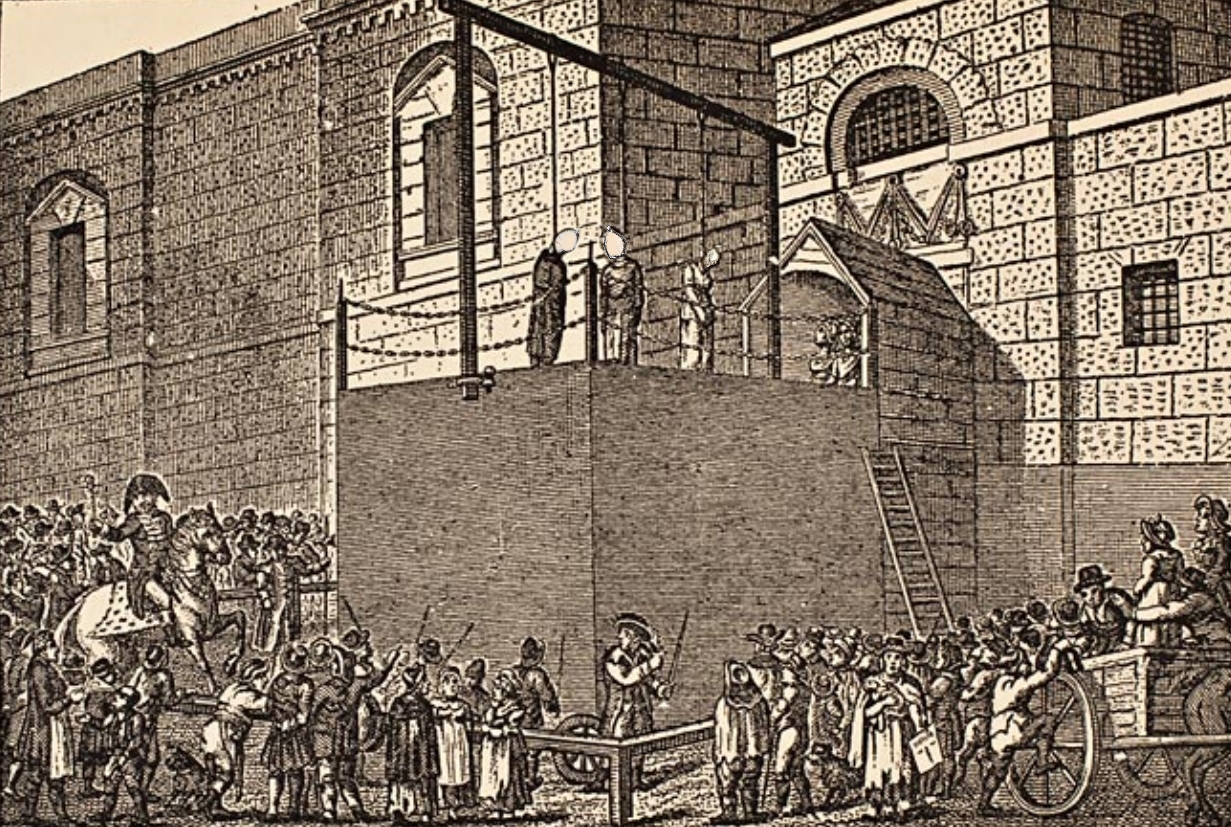
The process of judicial hanging


Introduction.

Hanging is the oldest but most widely used method of execution in the world today. In 2009 at least 337 hangings were recorded in seven countries, down from 339 men and 4 women in ten countries during 2008. These executions took place in
Bangladesh, Botswana, Iran, Iraq, Japan, Singapore and Sudan. 10 women were hanged in Iran during 2009, the highest number in recent years. Iran also carried out a small number of public hangings of men. Sadly, the majority of those hanged in the 21st century have still had to die by strangulation, particularly in Iran. It is estimated that only 95 of the hangings during 2009 used a drop designed to break the prisoner's neck.

Iraq seems to have adopted the American style of hanging. Hanging remains the standard method of execution in many retentionist countries, notably Japan, Singapore, Malaysia, South Korea, India, Pakistan, Bangladesh, several African countries, including Botswana and Zimbabwe, and some Middle Eastern countries including Iran, Iraq, Egypt, Jordan, Kuwait, Lebanon and Syria and in most Caribbean states.

The processes of judicial hanging.
There are 4 main forms of hanging.
  • Short drop hanging where the prisoner drops just a few inches, and their suspended body weight and physical struggling causes the noose to tighten, normally resulting in death by strangulation or carotid or Vagal reflex. Pole hanging is a variation on this method.
  • Suspension hanging where the executee is lifted into the air using a crane or other mechanism. Death is caused in the same way as with short drop hanging.
  • Standard drop hanging where the prisoner drops a predetermined amount, typically 4-6 feet, which may or may not break their neck. This was the normal method adopted in America in the later 19th and early 20th centuries.
  • Finally, measured or long drop hanging as practised in Britain from 1874, where the distance the person falls when the trapdoors open is calculated according to their weight, height and physique and is designed to break the neck. This method was adopted in British Colonies and by some other countries who wished to make executions more humane.
    Each of these processes are examined in detail below.
After the execution. After death by any form of hanging, the body will typically show the marks of suspension, e.g. bruising and rope marks on the neck. In some cases there will have been effusions of urine and faeces as the sphincter muscles become deprived of oxygen and thus relax. The opening of the sphincters can also be caused by an adrenaline rush which is common in circumstances of extreme fear.
Total body death results usually within less than 30 minutes as the cells becomes starved of oxygen. This was one of the reasons why prisoners were left hanging for an hour in Britain. It is noteworthy that irrespective of the method of hanging it seems to take about the same time for total body death to occur.


Does the prisoner feel pain where the drop is sufficient to break their neck?
Obviously no one can be sure but it is generally held that if the person does feel pain, it is only during the instant that their neck is broken which can be measured in milliseconds (see below).
Those who witnessed 20th century British hangings never described any obvious suffering on the part of the prisoner and the two post-mortem reports that are available do not seem to indicate anything but a quick death. There were no signs of conscious suffering in the independently witnessed hangings of Westley Allan Dodd in Washington and Billy Bailey in Delaware. Although death was not instantaneous (it never is) unconsciousness was. These were the last two hanging executions in the USA.


Read more:
The process of judicial hanging (Capital Punishment UK)

Sunday, February 28, 2010

The death penalty and the “14.99g” charge

While I was searching Lawnet for death penalty cases last December (preliminary statistics here), I also happened upon certain cases involving (to put it mildly) an interesting use of the Public Prosecutor’s discretion as regards the Misuse of Drugs Act.
Before this, I’d only known through hearsay that the prosecution occasionally presses a non-capital charge against a drug trafficker even though the actual quantity involved would have attracted the mandatory death penalty. (Alex Au mentions this practice in his article, in the second blurb in the right column.) So, even if the accused was found with 30g of heroin, he is charged with trafficking “not less than 14.99g”.
Of course, the prosecutorial discretion may be exercised in other ways to avoid the mandatory death penalty. For example, by pressing a charge of possession instead. Indeed, that’s been done sometimes. But this may potentially result in a manifestly inadequate penalty — even though the maximum sentence of 10 years’ jail for possession of a controlled drug is itself nothing to scoff at.
One might also say that the prosecution is simply exercising its discretion to charge for 14.99g of the heroin, but not the other 15.01g. The charges actually brought need not take into account every fact which occurred, or every act by the accused.
Compare the case where X breaks into Y’s house, kills Y and makes off with Y’s possessions. Most people would agree that the prosecution is entitled to charge X only for murder, without also charging him for criminal trespass or burglary. Thus, during X’s trial, the fact that X entered Y’s house illegally and stole some things becomes largely irrelevant. One might say that the “14.99g” case is not all that different — the prosecution is simply proceeding on certain facts, while ignoring others.
But here are the “14.99g” cases I’ve found between 1998 to 2009 (I may have missed a few):
  • Public Prosecutor v. Balakrishnan a/l Sannasy [2008] SGHC 6: The appellant, along with one other co-accused, was charged with trafficking “not less than 14.99g of diamorphine”. Both were caught in a Central Narcotics Bureau entrapment operation. In mitigation, the appellant argued that he “had an unhappy domestic life as he had a 14-year-old son who was born with a mental retardation, and also that he and his wife did not earn enough to provide money for his family’s medical expenses”. A sentence of 24 years’ jail and 15 strokes was meted out to both accused persons.
  • Public Prosecutor v Dhanabalan s/o A Gopalkrishnan [2003] SGHC 178: The accused, aged 33, had been recently retrenched from his job at Natsteel, and was selling food at a coffeeshop. His friend, Raman Selvam, offered him $100 for each block of cannabis he helped Raman cut and pack. In the judgment, it was noted that “[t]he prosecution accepts that the accused was not the main trafficker” (emphasis added). The accused was charged with trafficking 499.99g of cannabis and 749.99g of cannabis mixture, and was sentenced to 20 years’ jail and the maximum 24 strokes of the cane. Among the mitigating factors considered was “the co-operation that he had rendered the Central Narcotics Bureau and the prosecution in the investigation of his case as well as Raman’s.“ Raman himself was charged with and convicted of trafficking 2715.6g of cannabis, and sentenced to death.
  • Public Prosecutor v Rahmat Bin Abdullah [2003] SGHC 206: Both the accused in this case were originally charged with trafficking 1063g of cannabis. This charge was reduced by the prosecution to one involving 499.9g of cannabis; both accused pleaded guilty to the reduced charge. The first accused was a 59-year-old taxi driver, while the second accused was a 45-year-old unemployed Malaysian living in Singapore. For the trafficking charge, they were each sentenced to 22 years’ jail (and for the second accused, a further 15 strokes; the first accused was spared caning because he was over the prescribed age limit of 50 years).
  • Public Prosecutor v Yap Siew Luan [2002] SGHC 93: The accused was a 45-year-old Singaporean woman working as a part-time driver. She was arrested while driving from Malaysia into Singapore through the Woodlands Checkpoint, and subsequently charged with importing not less than 249.9g of methamphetamine without authorization. The judge noted that the original charge alleged importation of 386.1g, “which would have attracted the mandatory death penalty upon conviction”. The accused was sentenced to 24 years’ jail.
  • Gulam bin Notan Mohd Shariff Jamalddin v Public Prosecutor [1999] 2 SLR 181; [1999] SGCA 12: The two appellants in this case were originally tried with one Nor Azman bin Mustaffa for trafficking 392.66g of diamorphine. Nor Azman’s charge was subsequently amended — he was charged with abetting the two appellants to traffic in not less than 14.99g of diamorphine. He pleaded guilty to this and two related charges, and was sentenced to 28 years’ jail and 15 strokes in total. The two appellants were sentenced to death.
  • Public Prosecutor v Lim Kim Hock [1998] SGHC 274: The judge in this case noted: “for the first charge, the total quantity of diamorphine found in the Accused’s possession was actually 44.65 grammes. As a result, the Accused had originally faced a capital charge which was subsequently reduced to the present first charge.” This was for trafficking in 14.99g of diamorphine. The accused had been found to be HIV-positive. He had failed his PSLE exams three times and left school, working as a shop assistant and lastly as a painter on an odd-job basis. In deciding on the sentence, the judge observed: “since the Accused is facing a potential death sentence of another sort by virtue of his medical condition, I think, in the words of Shakespeare, “the quality of mercy is not strained” by reducing the punishment to the absolute minimum for each charge”. The absolute minimum for the trafficking charge, i.e. 20 years’ jail and 15 strokes, was thus applied.
The death penalty and the “14.99g” charge

Friday, February 26, 2010

TOC: The legal cannon of death

The following article is Part One of a two-part report which looks at the provisions in the Misuse of Drugs Act and certain processes of law regarding the application of the mandatory death penalty.

Drug trials hardly elicit any sympathy from us. It testifies to the efficacy of state indoctrination that we, in our obsession with discipline and order, find unquestioning appeal in the logic of deterrence.

We have faith that our tough drug laws keep our streets safe. It may seem strict, but that’s tough justice for you, we would reason. But no matter how statistically fascinated we are with having low crime (or the low prevalence of drugs), it remains to be seen whether justice has been necessarily upheld.

There can be ruptures between law and justice, and this is clearly evinced in the Misuse of Drugs Act: ironically living up to its name, the Act has been misused with its narrow definition and interpretation to callously dispense away with both justice and human lives.

Mandating the death penalty for the trafficking of either 15g of diamorphine (or prescription-grade heroin), 500g of cannabis, 30g of cocaine or 250g of methamphetamine, the Act has been premised on the assumption that these amounts suggest a purpose beyond personal consumption.

However, it does not even require any actual physical act of trafficking for a tryst with the noose. An amendment in 1993 determined that the mere intention to traffic is tantamount to an act of trafficking itself.

Legal scholar Michael Hor has identified trafficking in Singapore to mean the selling, giving, transporting, sending, deliver or distributing of drugs, and this ‘breathtakingly wide’ scope allows a trafficking charge to be contrived out of even the most innocuous of behaviour – such as giving drugs for a partner to consume or passing to a friend for safekeeping. This negates the Act’s initial intention to discern ‘between dealers in drugs and the unfortunate addicts who are their victims’.

As the judiciary grapples with cases that hover between possession (which provides relatively light punishments) and trafficking, it is disturbing to realize that mere ambiguous semantics has precariously elevated the chances of ‘unfortunate addicts’ to suffer the certainty of death.

TOC: The legal cannon of death

A call on the Government for a moratorium on the death penalty for traffickers

sgdeathpenalty has been actively campaigning to raise awareness on the use of the mandatory death sentence for drug traffickers like Yong Vui Kong, but the fact of the matter is that for every Yong Vui Kong, there maybe a dozen or so sentenced to the gallows that do not get publicised in the press.

The review of the law is pressing, and sgdeathpenalty together with The Online Citizen, calls for an immediate convening of a working group for a moratorium on the mandatory death penalty. How many lives must be wasted before we finally bring this issue to the table to be discussed? Is there no better alternative punishment for borderline drug cases like these, and is there no consideration that there is possibility of repentance and that the condemned person will bear no harm to society if given the chance to live?

To quote a netizen, "when the State brings its criminal jurisdiction to bear, it acts on behalf of all Singaporeans. If Vui Kong is hanged, he will be hanged on your name and mine." This statement bears true to all similar judicial executions carried out in Singapore.


TOC Editorial – A call to suspend all executions

The Online Citizen calls on the Singapore Government to impose a moratorium on all executions for those sentenced under the Mandatory Death Penalty (MDP). Our Special Focus Week the next 7 days or so urges the Singapore Government to consider the concerns and issues raised with regards to, in particular, the Misuse of Drugs Act and its provisions. TOC believes that there are serious and valid concerns about the application and provisions of the MDP which mandate a moratorium on executions. We urge the Prime Minister and his Government to consider these concerns and to allow an open and robust discourse with members of the public, the legal fraternity and Members of Parliament so that a true national consensus on judicial executions, based on informed considerations, is arrived at. We begin our appeal to the Government with our editorial position on the matter.

The Court of Appeals’ judgement on the Yong Vui Kong drug trafficking case on 31st December 2009 has reopened questions about the constitutionality of the mandatory death penalty. In a rather unexpected ruling, the court signalled its willingness to hear arguments against the usual precedents on this issue.
Rightly so, even though those arguments are well-worn and familiar. The chief drawback is that the mandatory death penalty leaves no room for judicial discretion and the consideration of mitigating conditions, such as the age of the defendant or his personal circumstances, and whether there is the possibility of rehabilitation. It is therefore needlessly arbitrary and cruel. Contrary to popular belief, there is also no definitive study showing that the mandatory death penalty has the much-lauded deterrent effect, in part because it is difficult to prove what might have happened without it. But chances are that effective enforcement and an expeditious court system play more important roles in deterring offenders.
The mandatory death penalty for drug trafficking is particularly egregious for several reasons. First, it lacks a sense of proportionality. A young unwitting drug mule (a typical profile of those arrested for trafficking) caught with 30 grams of morphine, for example, gets no more sentencing consideration than a serial killer, while this does nothing to deter the real traffickers who put him up to it. Second, the defendant is saddled with an unusually onerous burden of proof: if caught in possession of a drug, he is automatically presumed to be responsible for it and to know its nature, and if caught with a certain amount he is alleged to be trafficking.
In spite of this, detractors have argued that public support for the death penalty in Singapore is overwhelmingly strong. A commonly cited 2005 survey by the Straits Times indicated a 95% margin of support among 425 respondents, though the survey was undertaken just weeks after the high-profile drug trafficking Nguyen Tuong Van case involving an Australian-Vietnamese national at that time. Even so, there was no indication that the mandatory death penalty was properly understood or differentiated from capital punishment in general.
Furthermore, the figure might reflect apathy rather than conviction. Public awareness on crime and punishment issues is low: the Law Society, for instance, pointed out in 2009 that local universities barely cover the study of criminology or penology, and that there were scant statistics for research on the causes of crime and the effects of penal policies. Public opinion might be very different if the human cost of the mandatory death penalty was given greater public airing.
In any case, legal thinking on the subject has been gradually evolving. In 1981, the Privy Council found in the Ong Ah Chuan case that the mandatory death sentence for drug offences was in keeping with constitutional provisions. Since then, the Ong Ah Chuan ruling has formed the main plank of the state’s arguments for enforcing the mandatory death penalty for trafficking, but in 2004 the Privy Council reversed its position by ruling that “it is no longer acceptable, nor is it any longer possible to say…[as in the Ong Ah Chuan case]… that there is nothing unusual in a death sentence being mandatory.” The Yong Vui Kong ruling subsequently marked a change in the Court of Appeals’ receptiveness to arguments against the constitutionality of the mandatory death penalty, despite a ruling by the Court in the Nguyen Tuong Van case that the prohibition against cruel and inhuman punishment could not be found in the Constitution.
It is worth noting that legal thinking has usually been ahead of public opinion: right up till capital punishment was suspended by the British legislature in the 1960s, there remained strong public support for it to be retained for some serious offences. Given the gaping flaws in Singapore’s mandatory death penalty, it is about time that such an anachronistic policy be discarded. The Court of Appeal’s refreshingly open-minded attitude towards considering this proposition is therefore welcome.
In the meantime, it is only right for the government to impose a moratorium on executions under the mandatory death penalty – whatever the outcome of the court’s deliberations – so that a more informed public discussion can take place.
TOC Editorial – A call to suspend all executions

Wednesday, February 24, 2010

Belarus on its own way towards capital punishment ban

Belarus will seek its own way to cancel capital punishment. The statement was made by Nikolai Samoseiko, Chairman of the Legislation and Court Affairs Commission of the House of Representatives of the National Assembly, head of the parliamentary ad hoc group on capital punishment matters, on 22 February.

The MP said that the ad hoc group is supposed to find Belarus' indigenous way to deal with the capital punishment ban due to the country's geopolitical location. On the one side Belarus is bordered by the European Union where all the countries have banned capital punishment. On the other side there is China, the leader in the number of issued death penalties, and Russia which has vetoed capital punishment but the general public is ambiguous about it.

According to the MP, Belarus is now ripe to discuss whether it needs death penalties. There are strong pro and con arguments. In particular, those in favor believe that the possibility of death penalty can prevent crimes while those who oppose capital punishment point out that courts can make errors. There can be no winners in this dispute because the decision will be made depending on the political will, opinion of the general public, the legal base, believes Nikolai Samoseiko...

Belarus on its own way towards capital punishment ban

Wednesday, February 3, 2010

Most Singaporeans don't understand the term "mandatory" in death penalty

Kent Ridge Common article:
Singaporeans who do not understand what ‘mandatory’ means
Singapore — Street Journalism on the part of The Online Citizen team recently posed this question to Singaporeans: Do you support the mandatory death penalty for drug trafficking?
And the results were shocking.
Not because many were actually against the death penalty contrary to the much bandied about claim that most Singaporeans support the sentence for drug traffickers, but the startling relevation that most Singaporeans interviewed do not even understand what the word ‘mandatory’ meant.
Save for a young girl interviewed at the start of the video at Bugis Junction earlier last month, young Singaporeans who were posed the question had difficulty understanding its meaning. Suffice to say, it was the first time that many of them had thought about the issue of a mandatory death sentence for all drug traffickers in Singaporea without the discretion of the presiding judge weighing in to the verdict.
Judging from the protracted hesitation that many of these youths showed before they answered the question after a slight nudging from the interviewer, it is also clear that many of these youths do not have a latent position on the issue of mandatory death sentence in Singapore....