Latest: Singapore single mother awaits death row in Malaysia for drug trafficking. On the pretext of a business trip to China, Iqah was handed a suitcase containing heroin arranged by her Nigerian boyfriend and was arrested by Malaysian Immigration. A campaign is underway to raise funds for the appeal. To find out more, read

We have also heard that since Vui Kong's appeal started, there has been an unofficial stay of execution for all prisoners on death row in Changi Prison, pending the decision of the court on Yong's case. As the case has been dismissed by the Court of Appeal, we anticipate a Changi gallows bloodbath in a scale not seen since the Pulau Senang uprising in 1965 when 18 men were convicted of murder and hanged in a single Friday morning.

Singapore, which routinely persecute dissenters and critics, continue to hang young drug runners while at the same time work closely with Burmese military generals, and has invested billions in business ties with Burma, one of the biggest heroin manufacturing countries the world.

-----------------------------

If you know someone who's charged in a capital case, received the death sentence, or is on death row in Singapore and if you have have your side of the story to tell, contact us at sgdeathpenalty [at] gmail.com


Sunday, February 28, 2010

The death penalty and the “14.99g” charge

While I was searching Lawnet for death penalty cases last December (preliminary statistics here), I also happened upon certain cases involving (to put it mildly) an interesting use of the Public Prosecutor’s discretion as regards the Misuse of Drugs Act.
Before this, I’d only known through hearsay that the prosecution occasionally presses a non-capital charge against a drug trafficker even though the actual quantity involved would have attracted the mandatory death penalty. (Alex Au mentions this practice in his article, in the second blurb in the right column.) So, even if the accused was found with 30g of heroin, he is charged with trafficking “not less than 14.99g”.
Of course, the prosecutorial discretion may be exercised in other ways to avoid the mandatory death penalty. For example, by pressing a charge of possession instead. Indeed, that’s been done sometimes. But this may potentially result in a manifestly inadequate penalty — even though the maximum sentence of 10 years’ jail for possession of a controlled drug is itself nothing to scoff at.
One might also say that the prosecution is simply exercising its discretion to charge for 14.99g of the heroin, but not the other 15.01g. The charges actually brought need not take into account every fact which occurred, or every act by the accused.
Compare the case where X breaks into Y’s house, kills Y and makes off with Y’s possessions. Most people would agree that the prosecution is entitled to charge X only for murder, without also charging him for criminal trespass or burglary. Thus, during X’s trial, the fact that X entered Y’s house illegally and stole some things becomes largely irrelevant. One might say that the “14.99g” case is not all that different — the prosecution is simply proceeding on certain facts, while ignoring others.
But here are the “14.99g” cases I’ve found between 1998 to 2009 (I may have missed a few):
  • Public Prosecutor v. Balakrishnan a/l Sannasy [2008] SGHC 6: The appellant, along with one other co-accused, was charged with trafficking “not less than 14.99g of diamorphine”. Both were caught in a Central Narcotics Bureau entrapment operation. In mitigation, the appellant argued that he “had an unhappy domestic life as he had a 14-year-old son who was born with a mental retardation, and also that he and his wife did not earn enough to provide money for his family’s medical expenses”. A sentence of 24 years’ jail and 15 strokes was meted out to both accused persons.
  • Public Prosecutor v Dhanabalan s/o A Gopalkrishnan [2003] SGHC 178: The accused, aged 33, had been recently retrenched from his job at Natsteel, and was selling food at a coffeeshop. His friend, Raman Selvam, offered him $100 for each block of cannabis he helped Raman cut and pack. In the judgment, it was noted that “[t]he prosecution accepts that the accused was not the main trafficker” (emphasis added). The accused was charged with trafficking 499.99g of cannabis and 749.99g of cannabis mixture, and was sentenced to 20 years’ jail and the maximum 24 strokes of the cane. Among the mitigating factors considered was “the co-operation that he had rendered the Central Narcotics Bureau and the prosecution in the investigation of his case as well as Raman’s. Raman himself was charged with and convicted of trafficking 2715.6g of cannabis, and sentenced to death.
  • Public Prosecutor v Rahmat Bin Abdullah [2003] SGHC 206: Both the accused in this case were originally charged with trafficking 1063g of cannabis. This charge was reduced by the prosecution to one involving 499.9g of cannabis; both accused pleaded guilty to the reduced charge. The first accused was a 59-year-old taxi driver, while the second accused was a 45-year-old unemployed Malaysian living in Singapore. For the trafficking charge, they were each sentenced to 22 years’ jail (and for the second accused, a further 15 strokes; the first accused was spared caning because he was over the prescribed age limit of 50 years).
  • Public Prosecutor v Yap Siew Luan [2002] SGHC 93: The accused was a 45-year-old Singaporean woman working as a part-time driver. She was arrested while driving from Malaysia into Singapore through the Woodlands Checkpoint, and subsequently charged with importing not less than 249.9g of methamphetamine without authorization. The judge noted that the original charge alleged importation of 386.1g, “which would have attracted the mandatory death penalty upon conviction”. The accused was sentenced to 24 years’ jail.
  • Gulam bin Notan Mohd Shariff Jamalddin v Public Prosecutor [1999] 2 SLR 181; [1999] SGCA 12: The two appellants in this case were originally tried with one Nor Azman bin Mustaffa for trafficking 392.66g of diamorphine. Nor Azman’s charge was subsequently amended — he was charged with abetting the two appellants to traffic in not less than 14.99g of diamorphine. He pleaded guilty to this and two related charges, and was sentenced to 28 years’ jail and 15 strokes in total. The two appellants were sentenced to death.
  • Public Prosecutor v Lim Kim Hock [1998] SGHC 274: The judge in this case noted: “for the first charge, the total quantity of diamorphine found in the Accused’s possession was actually 44.65 grammes. As a result, the Accused had originally faced a capital charge which was subsequently reduced to the present first charge.” This was for trafficking in 14.99g of diamorphine. The accused had been found to be HIV-positive. He had failed his PSLE exams three times and left school, working as a shop assistant and lastly as a painter on an odd-job basis. In deciding on the sentence, the judge observed: “since the Accused is facing a potential death sentence of another sort by virtue of his medical condition, I think, in the words of Shakespeare, “the quality of mercy is not strained” by reducing the punishment to the absolute minimum for each charge”. The absolute minimum for the trafficking charge, i.e. 20 years’ jail and 15 strokes, was thus applied.
The death penalty and the “14.99g” charge

Friday, February 26, 2010

TOC: The legal cannon of death

The following article is Part One of a two-part report which looks at the provisions in the Misuse of Drugs Act and certain processes of law regarding the application of the mandatory death penalty.

Drug trials hardly elicit any sympathy from us. It testifies to the efficacy of state indoctrination that we, in our obsession with discipline and order, find unquestioning appeal in the logic of deterrence.

We have faith that our tough drug laws keep our streets safe. It may seem strict, but that’s tough justice for you, we would reason. But no matter how statistically fascinated we are with having low crime (or the low prevalence of drugs), it remains to be seen whether justice has been necessarily upheld.

There can be ruptures between law and justice, and this is clearly evinced in the Misuse of Drugs Act: ironically living up to its name, the Act has been misused with its narrow definition and interpretation to callously dispense away with both justice and human lives.

Mandating the death penalty for the trafficking of either 15g of diamorphine (or prescription-grade heroin), 500g of cannabis, 30g of cocaine or 250g of methamphetamine, the Act has been premised on the assumption that these amounts suggest a purpose beyond personal consumption.

However, it does not even require any actual physical act of trafficking for a tryst with the noose. An amendment in 1993 determined that the mere intention to traffic is tantamount to an act of trafficking itself.

Legal scholar Michael Hor has identified trafficking in Singapore to mean the selling, giving, transporting, sending, deliver or distributing of drugs, and this ‘breathtakingly wide’ scope allows a trafficking charge to be contrived out of even the most innocuous of behaviour – such as giving drugs for a partner to consume or passing to a friend for safekeeping. This negates the Act’s initial intention to discern ‘between dealers in drugs and the unfortunate addicts who are their victims’.

As the judiciary grapples with cases that hover between possession (which provides relatively light punishments) and trafficking, it is disturbing to realize that mere ambiguous semantics has precariously elevated the chances of ‘unfortunate addicts’ to suffer the certainty of death.

TOC: The legal cannon of death

A call on the Government for a moratorium on the death penalty for traffickers

sgdeathpenalty has been actively campaigning to raise awareness on the use of the mandatory death sentence for drug traffickers like Yong Vui Kong, but the fact of the matter is that for every Yong Vui Kong, there maybe a dozen or so sentenced to the gallows that do not get publicised in the press.

The review of the law is pressing, and sgdeathpenalty together with The Online Citizen, calls for an immediate convening of a working group for a moratorium on the mandatory death penalty. How many lives must be wasted before we finally bring this issue to the table to be discussed? Is there no better alternative punishment for borderline drug cases like these, and is there no consideration that there is possibility of repentance and that the condemned person will bear no harm to society if given the chance to live?

To quote a netizen, "when the State brings its criminal jurisdiction to bear, it acts on behalf of all Singaporeans. If Vui Kong is hanged, he will be hanged on your name and mine." This statement bears true to all similar judicial executions carried out in Singapore.


TOC Editorial – A call to suspend all executions

The Online Citizen calls on the Singapore Government to impose a moratorium on all executions for those sentenced under the Mandatory Death Penalty (MDP). Our Special Focus Week the next 7 days or so urges the Singapore Government to consider the concerns and issues raised with regards to, in particular, the Misuse of Drugs Act and its provisions. TOC believes that there are serious and valid concerns about the application and provisions of the MDP which mandate a moratorium on executions. We urge the Prime Minister and his Government to consider these concerns and to allow an open and robust discourse with members of the public, the legal fraternity and Members of Parliament so that a true national consensus on judicial executions, based on informed considerations, is arrived at. We begin our appeal to the Government with our editorial position on the matter.

The Court of Appeals’ judgement on the Yong Vui Kong drug trafficking case on 31st December 2009 has reopened questions about the constitutionality of the mandatory death penalty. In a rather unexpected ruling, the court signalled its willingness to hear arguments against the usual precedents on this issue.
Rightly so, even though those arguments are well-worn and familiar. The chief drawback is that the mandatory death penalty leaves no room for judicial discretion and the consideration of mitigating conditions, such as the age of the defendant or his personal circumstances, and whether there is the possibility of rehabilitation. It is therefore needlessly arbitrary and cruel. Contrary to popular belief, there is also no definitive study showing that the mandatory death penalty has the much-lauded deterrent effect, in part because it is difficult to prove what might have happened without it. But chances are that effective enforcement and an expeditious court system play more important roles in deterring offenders.
The mandatory death penalty for drug trafficking is particularly egregious for several reasons. First, it lacks a sense of proportionality. A young unwitting drug mule (a typical profile of those arrested for trafficking) caught with 30 grams of morphine, for example, gets no more sentencing consideration than a serial killer, while this does nothing to deter the real traffickers who put him up to it. Second, the defendant is saddled with an unusually onerous burden of proof: if caught in possession of a drug, he is automatically presumed to be responsible for it and to know its nature, and if caught with a certain amount he is alleged to be trafficking.
In spite of this, detractors have argued that public support for the death penalty in Singapore is overwhelmingly strong. A commonly cited 2005 survey by the Straits Times indicated a 95% margin of support among 425 respondents, though the survey was undertaken just weeks after the high-profile drug trafficking Nguyen Tuong Van case involving an Australian-Vietnamese national at that time. Even so, there was no indication that the mandatory death penalty was properly understood or differentiated from capital punishment in general.
Furthermore, the figure might reflect apathy rather than conviction. Public awareness on crime and punishment issues is low: the Law Society, for instance, pointed out in 2009 that local universities barely cover the study of criminology or penology, and that there were scant statistics for research on the causes of crime and the effects of penal policies. Public opinion might be very different if the human cost of the mandatory death penalty was given greater public airing.
In any case, legal thinking on the subject has been gradually evolving. In 1981, the Privy Council found in the Ong Ah Chuan case that the mandatory death sentence for drug offences was in keeping with constitutional provisions. Since then, the Ong Ah Chuan ruling has formed the main plank of the state’s arguments for enforcing the mandatory death penalty for trafficking, but in 2004 the Privy Council reversed its position by ruling that “it is no longer acceptable, nor is it any longer possible to say…[as in the Ong Ah Chuan case]… that there is nothing unusual in a death sentence being mandatory.” The Yong Vui Kong ruling subsequently marked a change in the Court of Appeals’ receptiveness to arguments against the constitutionality of the mandatory death penalty, despite a ruling by the Court in the Nguyen Tuong Van case that the prohibition against cruel and inhuman punishment could not be found in the Constitution.
It is worth noting that legal thinking has usually been ahead of public opinion: right up till capital punishment was suspended by the British legislature in the 1960s, there remained strong public support for it to be retained for some serious offences. Given the gaping flaws in Singapore’s mandatory death penalty, it is about time that such an anachronistic policy be discarded. The Court of Appeal’s refreshingly open-minded attitude towards considering this proposition is therefore welcome.
In the meantime, it is only right for the government to impose a moratorium on executions under the mandatory death penalty – whatever the outcome of the court’s deliberations – so that a more informed public discussion can take place.
TOC Editorial – A call to suspend all executions

Wednesday, February 24, 2010

Belarus on its own way towards capital punishment ban

Belarus will seek its own way to cancel capital punishment. The statement was made by Nikolai Samoseiko, Chairman of the Legislation and Court Affairs Commission of the House of Representatives of the National Assembly, head of the parliamentary ad hoc group on capital punishment matters, on 22 February.

The MP said that the ad hoc group is supposed to find Belarus' indigenous way to deal with the capital punishment ban due to the country's geopolitical location. On the one side Belarus is bordered by the European Union where all the countries have banned capital punishment. On the other side there is China, the leader in the number of issued death penalties, and Russia which has vetoed capital punishment but the general public is ambiguous about it.

According to the MP, Belarus is now ripe to discuss whether it needs death penalties. There are strong pro and con arguments. In particular, those in favor believe that the possibility of death penalty can prevent crimes while those who oppose capital punishment point out that courts can make errors. There can be no winners in this dispute because the decision will be made depending on the political will, opinion of the general public, the legal base, believes Nikolai Samoseiko...

Belarus on its own way towards capital punishment ban

Wednesday, February 3, 2010

Most Singaporeans don't understand the term "mandatory" in death penalty

Kent Ridge Common article:
Singaporeans who do not understand what ‘mandatory’ means
Singapore — Street Journalism on the part of The Online Citizen team recently posed this question to Singaporeans: Do you support the mandatory death penalty for drug trafficking?
And the results were shocking.
Not because many were actually against the death penalty contrary to the much bandied about claim that most Singaporeans support the sentence for drug traffickers, but the startling relevation that most Singaporeans interviewed do not even understand what the word ‘mandatory’ meant.
Save for a young girl interviewed at the start of the video at Bugis Junction earlier last month, young Singaporeans who were posed the question had difficulty understanding its meaning. Suffice to say, it was the first time that many of them had thought about the issue of a mandatory death sentence for all drug traffickers in Singaporea without the discretion of the presiding judge weighing in to the verdict.
Judging from the protracted hesitation that many of these youths showed before they answered the question after a slight nudging from the interviewer, it is also clear that many of these youths do not have a latent position on the issue of mandatory death sentence in Singapore....

Friday, January 22, 2010

Death penalty awareness campaign


Death penalty awareness campaign

Location: Pasir Ris Central
Date: 22 Jan 10

The truth about the mandatory death sentence is that it is a law that gives the offender no chance of requital, and Singapore is one of the few countries left in the world that continue to religiously execute drugs offenders.

When people realise how unfair such a law is, they will think twice about callously supporting the mandatory death penalty. Death should never be mandatory. Even murderers sometime get a chance to be convicted for manslaughter, which carries life imprisonment, why not drug traffickers?

In our outdoor campaign today at Pasir Ris Central we received some questions and feedback from the public.

"Is this an anti-drug campaign?"
This is a campaign to bring forth awareness on the issue of mandatory death sentence and the death penalty in general.

"Is this a pro-death penalty campaign?"
We all know too well there is no need for a campaign like that in pro-death penalty Singapore.

"How can we help?"
Step forward, come down to our activities, contact us. Help us with our campaign. Put this up on your blog and Facebook. Let people know about Yong Vui Kong. Educate yourself on the mandatory death penalty issue to know just how unfair it is for convicted drug traffickers.

"Do you guys get paid for this?"
We don't, but donations are welcomed.

"Are you from the Singapore Police Force?"
They are busy with other matters, such as arresting teenage drug offenders.

Thursday, January 21, 2010

The Mandatory Death Penalty – views from young S’poreans


TOC TV takes to the street to ask young Singaporeans what they think about the mandatory death sentence. You may be surprised to know that many people, even those in the legal circle do not know that such a law exists.


This is the reason why an educational campaign is so important, because the truth about mandatory sentencing is that it is a law that gives the offender no chance of requital, and Singapore is one of the few countries left in the world that continue to religiously execute drugs offenders.

When people realise how unfair such a law is, they will think twice about callously supporting the mandatory death penalty. Death should never be mandatory. Even murderers sometime get a chance to be convicted for manslaughter, which carries life imprisonment, why not drug traffickers?


4 Feb 10 Update:
TOC interviews NUS law students on the mandatory death penalty. Most of the students interviewed knows what the mandatory death penalty carries, and find the law to be overly heavy to the convicted, especially for drug traffickers. Their responses are a stark contrast to the man on the street, because information on the implication of mandatory sentencing is not readily available, and practically never discussed in the mainstream media.

People cannot take a stand on something they never heard about, and the mainstream media have a moral obligation to inform the general public about this issue because any judicial execution in Singapore is carried out in the name of every Singapore citizen.

Saturday, January 16, 2010

TOC Editorial: A hint of assertiveness

TOC Editorial: A hint of assertiveness

The Court of Appeals’ Yong Vui Kong ruling could signal a change in criminal jurisprudence

The Court of Appeals’ surprisingly liberal ruling on the Yong Vui Kong case, delivered in a written judgment on 31st December 2009 by Chief Justice Chan Sek Keong, is a welcome – if overdue – step in the right direction. Since Chief Justice Chan’s ascension to the Supreme Court in 2006, there have been indications that he was moving the judiciary away from his predecessor Yong Pung How’s single-minded focus on speed in disposing cases and his rigid adherence to precedence, an approach which some have argued prioritised efficiency over justice.

In this regard the Yong Vui Kong ruling is the clearest sign of a new direction in criminal jurisprudence. In December 2009, a High Court judge unexpectedly stayed the execution of a convicted drug mule just days before the sentence was supposed to carried out so that the latter could appeal his sentence to the Court of Appeals, despite already having his petition for clemency denied by the President. Over the state prosecution’s objections, the Court of Appeals subsequently upheld the High Court judge’s decision and allowed the plaintiff to proceed with his appeal.

The Chan court’s reasoning on its decision reeks of liberal sentiment. One notable departure from the Yong court was that the Chan court in effect gave the plaintiff the benefit of the doubt, by accepting the argument that the plaintiff did not understand his legal options when he withdrew his appeal to the Court of Appeals in April 2009 before it could even be considered. It is quite likely that the Yong court, given its usual impatience with such human lapses, might have dismissed the present case on that pretext alone.

The second significant departure was the Chan court’s readiness to question the constitutionality of the mandatory death penalty by hinting that it might be receptive to arguments against the usual precedents on this issue. In doing so, the Chan court rejected one of the state prosecution’s favourite arguments, that putting off the execution would open the “floodgates” to abuses of the judiciary process. The court made it clear that it was in the public interest to consider the appeal. This stay of execution from the judiciary has already given renewed momentum to anti-death penalty activists in Singapore.

The third aspect was an unusually firm assertion of judiciary prerogative in the face of the executive branch’s demand for the court not to obstruct the execution. Significantly, the Chan court dismissed the prosecution’s argument that it had no jurisdiction over a case that had already been decided by a lower court, reasserting its privilege to re-try cases to correct a possible “miscarriage of justice”. In a country where appeals to the highest court in the land are rare and granting of appeals even rarer, this could set a more humane tone for a system that usually brooked no questioning of its judgments. The court also declared that, regardless of whether the President concurred in the judiciary’s stay of execution, it would have been unacceptable for the state to carry out the execution while the case was still ongoing.

Despite these positive developments, some caution is in order. The judgment appears to have been triggered in large measure by what might have been seen as an unwarranted intrusion by the executive into the judiciary’s prerogative and it remains to be seen whether the court will actually strike down the mandatory death penalty. Furthermore, the ruling is scant indication that the court would behave similarly in political cases against the ruling party. Still, the Yong Vui Kong ruling might prove to be a turning point in criminal jurisprudence in Singapore, something which would be enough to merit Chief Justice Chan the International Jurists Award he was given by his global peers in November 2009.

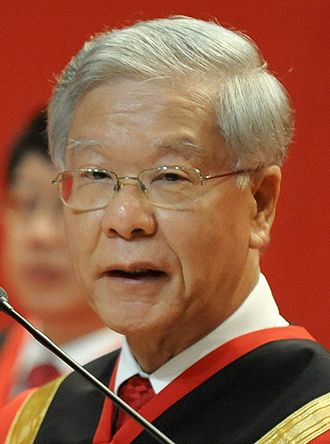
Photo from the Straits Times


Friday, January 15, 2010

Mongolia moratorium on executions


Mongolia leader calls for end to death penalty

Mongolia's president has imposed a moratorium on the death penalty, although changing the law to implement a permanent ban on executions will still have to pass Mongolia's opposition-dominated parliament.

Rights groups welcomed the remarks by Elbegdorj Tsakhia on Thursday, hailing the move as a step toward outlawing executions.

Citing two recent cases Elbegdorj said "the state would have killed innocent citizens" if the appeals courts had not overturned death sentences and dropped them altogether....

Thursday, January 7, 2010

'In the interest of justice' for court to right judicial wrongs

Today Online article

SINGAPORE - Whose responsibility is it to put right miscarriages of justice, if ever there are any - the judiciary or the President?

In possibly the most far-reaching ruling on this matter the Supreme Court has made, the three-judge Court of Appeal - comprising Chief Justice Chan Sek Keong, Justice VK Rajah and Justice Andrew Phang - has said it was "in the interest of justice" for the court to have that power.

It is possible, for example, that a conviction here may one day be confronted with new evidence - or "essentially an error in the judicial process" - and the three judges said it was "reasonable to assume that the court is better placed to evaluate the merit of the new evidence", rather than rely on the Executive.

Above all, an appellant in a criminal case - even one who is facing the death penalty - is entitled to raise all defences available in law.

The issue of whether the court can review its decisions has arisen in a couple of recent cases, most notably that involving convicted Malaysian drug mule Yong Vui Kong.

And the Court of Appeal's comments - in a 21-page grounds of decision, which MediaCorp obtained a copy of - come nearly a month after it shot down a claim made by the Attorney General's (AG) Chambers that the High Court had no authority to put off Yong's execution.

The 21-year-old, who was sentenced to death in November last year for trafficking 47g of heroin, was to be hanged in December after his clemency plea was rejected by the President.

But days before the sentence was to be carried out, defence lawyer M Ravi successfully sought a stay of execution from the High Court - a decision the AG's Chambers had opposed.

Deputy Public Prosecutor Jaswant Singh argued that granting a stay of execution would open the floodgates and allow for abuse of the judicial process.

In the judges' view, according to the document, the "finality principle" should not be applied strictly in criminal cases "where the life or liberty of the accused is at stake as it would subvert the true value of the judicial process" which is to ensure as far as possible that "the guilty are convicted and the innocent are acquitted".

Similarly, they also believed the floodgates argument "should not be allowed to wash away both the guilty and the innocent".

"In our view the public interest in having finality in court proceedings could not possibly outweigh the public interesting in determining whether or not the mandatory death sentence was constitutional under the Constitution," wrote Chief Justice Chan.

"The developments referred to by counsel, new or old, may or may not be relevant in the Singapore context, but due process requires us to hear the appeal in the present case."

Yong had originally filed an appeal against the conviction and sentence but in April last year he instructed his then-lawyers to withdraw it for religious reasons.

At that time, he had embraced Buddhism while in prison and wanted to own up to what he had done.

Yong's next appeal date will be heard at the High Court sometime in March.

Tuesday, January 5, 2010

Opinion piece: Why I support the death penalty and a second chance for Yong Vui Kong

Letter from Mr Marcus Lee to The Online Citizen on the death penalty issue.

In any debate, it is tempting to want simply to win the argument. I believe the more important goal is to learn how to make our society a better place. I hope my letter has been of some educational value. At the end of the day, all we want is for Yong and other drug traffickers to receive sentences they truly deserve.

Why I support the death penalty and a second chance for Yong Vui Kong

Wednesday, December 30, 2009

Vui Kong's story


An account of Yong Vui Kong's life


Vui Fung, Vui Kong, Ah Lun, Yun Leong with their mother


Yong Vui Kong, born to a family of 6, went through a turbulent childhood when his parents divorced while he was very young. As a result his mother had to raise the kids singlehandedly.

Being a dishwasher she brought home RM$200 a month, and the family had to scrap by at the most basic sustenance level.

Eventually this paved the way for Vui Kong's departure from their hometown of Sabah, East Malaysia to the big city of Kuala Lumpur.


Vui Kong with brothers during happier days


In 2002, Vui Kong the country boy left Sabah for KL, bringing nothing but him but the desire to make it big.


A young and rebellious Vui Kong

He was described by his family as "rebellious", often mixing with bad company and getting into trouble. Yet, Vui Kong would be the apple in his mother's eyes. He treated his siblings well, especially Vui Fung who would often relate how much Vui Kong doted on her, even though he would sometimes throw his temper at home when things were not going well for him.


Vui Fung (Fung Fung) with Vui Kong


But all these was not meant to last.

Vui Kong worked as a kitchen hand in KL, but was later introduced to a gang, whose boss showered him with 5 star hotel stays and treated him to meals he could never be able to afford.


Vui Kong mixed with the wrong company, which eventually sealed his fate


Eventually Vui Kong went from debt collecting to "delivering gifts". These gifts turned out to be drugs. At that young and impressionable age, Vui Kong had no idea that the penalty for trafficking of drug was mandatory death.


The "gifts" that Vui Kong delivered to Singapore


At 18, Yong Vui Kong was conscripted for National Service. He would later return to KL back to the same boss who provided him with work and lead him on to be a drug runner.


Vui Kong would later shuttle back and forth Singapore and Malaysia several times until he was caught in June 2007 with possession of 47g of heroin. Yong was 18 and a half years old at the time of arrest. Singapore drug laws stipulate mandatory death for 18 years and above. Vui Kong faced certain death the moment he was caught by narcotics officers.

Vui Kong, represented by state-assigned counsel Kelvin Lim, was trialed in Singapore High Court.


Justice Choo Han Teck found Vui Kong too young to be dealt with the mandatory death sentence


Before passing the judgement, trial judge Justice Choo Han Teck summoned both the defence and presecution into chamber and asked the prosecution if they would consider reducing the charge given the relatively young age of the drug offender, who was not even 19 at the age of the offence. The prosecution declined and the death sentence was handed to Vui Kong.

Yong's then defence counsel, following the common practice for almost all capital cases for drug trafficking, was preparing to take the case to the Court of Appeal.

Kelvin Lim, under specific instruction from his client, withdrew the Appeal.


Changi Prison customary photo taking session before execution


At this point in time, Vui Kong's sister, Fung Fung, had already bought a shirt and pants for her brother. It is customary for prisoners on death row to don on their best in a bizzare and morbid prison practice - photos of the prisoner in various poses will be shot and the pictures will be sent to the convict's family after the execution.


"I don't want to lie to save myself."

Vui Kong instructed his lawyer to withdraw the appeal


Why did Vui Kong withdraw the appeal?

Apparently, he was under the impression that a High Court Appeal could only work if there are new evidence to prove that he was innocent of the charge, and he thought that the only way out was to lie to be able to save himself.

After taking up Buddhism as his religion while in prison, Vui Kong did not want to lie which was a sin according to Buddhist beliefs, he therefore instructed his counsel to withdraw the Appeal.

Vui Kong did not know that he involuntarily extended his stay in this world by withdrawing his own High Court Appeal, the only legal lifeline available to him.

Because of this withdrawal, the high Court hastened the execution process and ordered Yong to be executed on 4th December 2009.


M. Ravi intervenes

M. Ravi holding a picture of a Buddha like figure drawn by Yong while in prison


Singapore human rights lawyer Madasamy Ravi got wind of Yong's case. He promptly took over the case from Yong's counsel Kelvin Lim after a court hearing.

Ravi submitted a clemency appeal to the Singapore President, but on 20th November, it was rejected by the Istana.


Yong was granted a rare last minute stay of execution


Two days before Yong's scheduled execution, Ravi made an application for a stay of execution for Vui Kong pending a High Court hearing for an appeal. The Court of Appeal had previously not heard Vui Kong's case as his defence lawyer had withdrawn it.


Vui Kong broke down in court when he heard his execution on Friday was stayed


The judge decided that he was not in the position to make the decision for the Court of Appeal, granted the stay of execution for Vui Kong. Vui Kong, who was present in court, broke down and cried when he heard the news.


Vui Kong Finally meet his mother after two years of incarceration


A day after the court's decision, Yong met his mother, who came to Singapore accompanied by his siblings. Upon seeing his mother, Yong knelt and bowed to her three times in a show of respect.


Vui Kong's mother still does not know that her son had been sentenced to death.


For fear that she may commit suicide due to suffering from chronic depression, Vui Kong's family had kept his fate away from her. The only idea she has of why her son is in jail is that "he had committed a very serious matter and that he will be gone for a very long time in order to atone for his sins and will not return unless he has attained self fulfillment".

On 8th December, Vui Kong received a 2nd stay of execution, this time from the Court of Appeal. The stay of execution was in effect until the Appeal was presented and debated in court. The court gave the defence much needed time to prepare the case, and activists more time to campaign for it.

Yong outlived his original death sentence for a full 4 months. This was something he never saw coming on the eve of his execution.


Campaigns to save Vui Kong


Singapore Anti Death Penalty Campaign flyer


Ravi, in the months after the court's decision to grant the stay of execution, set off to do his research, pro bono. He engaged the help of Queen's counsels in London, dug up the various developments in other Commonwealth countries on the mandatory death penalty and at the end compiled an appeal submission 5 volumes thick.


London team of lawyers who provided valuable research and help: Parvais Jabbar, Edward Fitzgerald QC, M. Ravi and Saul Lehrfreund


On 15th March the high Court convened for Vui Kong's appeal. After both sides presented their cases and arguments, the judges praised M. Ravi for the effort he had put into his submission and thanked him for providing the court with an update on current international practices with regards to the death penalty. They decided to reserve judgement on the hearing until further notice. (credits to TOC)


"The court acknowledge that the mandatory death sentence is considered a cruel, degrading and inhuman punishment," - Chief Justice Chan Sek Keong


On 14th May, the Court of Appeal duly rejected the appeal. But it acknowledged that the mandatory death sentence is considered a cruel, degrading and inhuman punishment.

In June, Vui Kong's counsel M. ravi made a trip down to KL in an attempt to rally the Malaysians together over the case.

There was a buzz initially when the Malaysian online media carried Vui Kong's story, but it fizzled out after a week or two.


Umi Azlim, the Malaysian girl sentenced to death for drug trafficking


In 2007, Umi Azlim was sentenced to death in China. Curiously, she had a sentence commuted to life imprisonment after the Malaysian government appeal to the Chinese government citing compassionate grounds.

Vui Kong received no such attention from the Malaysian government.


No Political Mileage

"Probably because he presents no political mileage. He is first of all a (Malaysian) Chinese, and a Sabahan."


But the Malaysian media had their ways. many online media outlets, especially MalaysiaKini, ran a media blitz over Vui Kong's case and nudge the Malaysian government to do something to help the boy who was facing the gallows overseas.


Ravi with MP Tian Chua and Malaysia's Foreign Minister Anifah Aman (Photo: TOC)


But all was not lost. On 3rd July it was announced that PKR's MP Tian Chua would table a debate on Vui Kong's case in Parliament the following Monday. It was rejected by the Speaker of Parliament, but a press conference was held and Malaysia's Foreign Minister was present.


"After all, I am a Sabahan too” - Malaysia's FM Anifah Aman pledged to assist in Yong's case

He told Ravi and the Malaysian press, “All things aside, if I save one life it will give me great satisfaction. After all, I am a Sabahan too”, referring to the Malaysian state where Yong comes from. (Credit: TOC)

After his statement, almost all media outlets in Malaysia carried the news.

Malaysian activists promptly got to work to set up a site, 2ndChance4Yong, to campaign for Vui Kong.

For the first time, Yong did not just have to rely on Singapore, he had the support of the people from his country as well.


To be continued...
Updated 6th July 2010
Further updates here: Vui Kong's Journey


Vui Kong's Story


Vui Kong (middle), with his siblings during happier times

Yong Vui Kong (杨伟光) was 18 years and 6 months old when he was arrested for trafficking 47 grams of heroin into Singapore. He was scheduled to hang on Friday, 4th December 2009, but after an abrupt appeal application 2 days before his slated execution date, he was granted a stay of execution until after his his appeal hearing on 15th March 2010.

Vui Kong's Story: Excerpts from an interview with his brother, Yun Leong (video)

We were poor and grew up in the countryside. We didn't have a good education. Mom and Dad divorced when we were young. Our mother had a tough time bringing us up. Because she had to raise 4 of us up my herself, we did not receive a good education.

Vui Kong went to KL at the age of 14 and found work as a kitc
hen hand. Later he was introduced to a job selling pirated CDs and that's when he started hanging out with gangs. His boss trusted him, and also tempted him with money. He would take Vui Kong to five star hotels for meals and bought him nice clothes.

My brother never thought that a poor boy like him from the countryside could become rich or powerful. He also needed the money to help pay for my mother's illness because she suffers from depression.

My brother moved from collection debts to delivering "gifts". These gifts were actually drugs. These gifts were actually drugs. In the past he didnt know that drug trafficking would cost him his life. It was only when he was in prison that he know drug trafficking meant death.

Drug trafficking is a serious crime anywhere in the world. Because of Vui Kong's crime, I think he deserves to be punished. But I think the law in Singapore could look at his case from different angles, for example his family background, his personal story, the fact that he was lured by his boss, who tempted him and controlled his every move.

The death penalty is so serious because he is a first time offender and naive about the world, but there's no turning back for him. I think it's tragic.

Vui Kong (far right) with his elder brothers


Vui Kong's story doesn't just end here - Heroin Smuggler Challenges Singapore Mandatory Death Sentence


Lawyers for a young Malaysian man facing the death penalty for drug smuggling are arguing that the mandatory death sentence is inhumane and disproportionate.

Singapore executes anyone found guilty of importing more than 15 grams of drugs.
It is one of the few countries in the world to impose compulsory death sentences for drug offences.

As Monica Kotwani reports from Singapore, it is being seen as a key challenge against the longstanding law.
Ah Leong takes a rare break from working in the kitchen at the Marriott Hotel in the heart of Singapore’s shopping district.
He wrings his hands anxiously. His brother Vui Kong is on death row.
Ah Leong says they have had a tough life.
“My parents split up when he was just three. My father left us and my mum had to support us.”
Ah Leong says seeing his mum struggle to survive caused his brother to be attracted by the prospects of riches in the capital. There he was lured into drug trafficking.
“We’re from Sabah, and very poor. You work so hard but you earn very little. But in Kuala Lumpur, Vui Kong’s boss called him to work, and paid him well. He was told by his boss to take these things and give them to people. He could not say no to his boss’s demands.”
Vui Kong was 19 years old when he was arrested in Singapore for possessing 47 grams of heroin, more than twice the maximum amount that warrants the mandatory death penalty.
He was later convicted of trafficking drugs, and sentenced to death.
But in December last year, a few days before Vui Kong was due to be hanged his lawyers obtained an emergency reprieve.
M Ravi is his appeal lawyer.
“When we say mandatory death sentence means basically judges don’t have discretion. Just close your eyes, and that’s it, and execute. Don’t have to look at the person’s background and all that. You know in a sentencing regime, there’s a plea in mitigation, to mitigate your circumstances, it’s part of the sentencing process, so, it was not only that the death penalty was already harsh, but to impose that, it’s just cruel and unusual punishment.”
Taiwan recently abolished the mandatory death penalty and China, which continues to execute prisoners, allows judicial discretion in sentencing drug-related cases.
Ravi says Singapore is out of touch.
“It is a very outdated, outmoded approach. It is not compatible with evolving standards of human rights decency. 95 percent of Asian countries have abolished it.”
Singapore has seen a big decline in its use of the death penalty but the government is resisting any change to the law.
In 2009, Law Minister K Shanmugam cited a survey conducted by Singapore’s main newspaper, The Straits Times, which found that 95 percent of Singaporeans support the death penalty.
But Andrew Loh editor of the Online Citizen website believes this is not an accurate picture.
“There’s a difference between the death penalty and the mandatory death penalty. From my experience, from talking to people, explaining to them what it is, most of the people, when they understand it more, they do not support the mandatory death penalty.”
Andrew says there have been some high profile execution cases in the last few years that involved the Australian and Nigerian governments but, he says, so far the Singaporean government has not relented to international pressure.
“Whenever such cases come out, the government turns the whole issue around to become about national sovereignty - that we have the right to impose our own set of laws. I don’t know why they do that. Maybe to get the general public to support the government, because if you turn it to a national pride kind of issue, people will feel these other countries are attacking us so we have to defend the government.”
I’m standing outside the Supreme Court of Singapore, where Yong Vui Kong’s appeal is being heard.
In the hearing, Singapore’s Attorney General, Walter Woon is arguing that the Mandatory Death Penalty deters others from doing the same.
Asia Calling requested an interview with the Attorney General many times but I was informed by a staff member that he was on a very long leave. An email request for an interview with the Ministry of Home Affairs was denied.
Defence Lawyer Ravi says research in Hong Kong has shown that the death penalty does not reduce crime.
“The fact that it does not deter has been researched by Jeffrey Fagan. Jeffrey Fagan did a study between HK and Singapore - a tale of two cities, that’s the title of his research. After the abolition of capital punishment in HK, there was a reduction in terms of homicide as well as drug trafficking in Hong Kong.”
Back outside the Marriot Hotel Ah Leong has nearly finished his break.
He says he just wants his little brother to live.
“I hope for anything but the death penalty. Anything else is ok. In prison, he can learn, to cook, or read. Twenty or thirty years, it doesn’t matter. It’s still a chance for him, because he’s still such a young boy.”
Ah Leong’s mother suffers from depression and he fears she will not survive if Vui Kong is hanged.
So the family has decided to keep her in the dark.
“As long as she lives, we will never tell our mother. We’ll just tell her that he has been caught, and is in prison. I think this is for the best.”
Courtesy of asiacalling.org